

Mantrailing: What Scent Article Works Best?


In mantrailing, we ask our dogs to take a reference scent from a specific person using an article that has been in contact with them. Using this, the dog then goes out and matches that odour out in the environment in the form of trailing. The dogs task is hard!
They work through discrimination, sampling, acquiring and reacquiring the target scent in the real world until, for us at least; they locate that person.
Traditionally, teams often begin with something simple, an item of clothing, freshly worn and contained ready for the dog to use.
But is this the most useful starting point, especially for beginner dogs?
Recent research into how dogs perceive human scent is suggesting that a persons breath is a much more potent part of the human scent picture our dogs use.
A 2026 study by Walker, Hall and Aviles-Rosa looked at search and rescue dogs and compared their responses to scent from:
1. Human breath,
2. Skin,
3. A combination of both,
Like all good research there was a control with no human scent present as well and the results told us that all of the dogs responded to breath, and breath combined with skin, while only two responded to skin scent alone. The dogs also responded more quickly to breath than to skin scent by itself.
This isn’t new though, other research in the lab also found the same results but these dogs did it working in the real world.
Human breath contains a large number of those all important VOCs (volatile organic compounds) which is present in exhaled breath. This contains a cocktail of rich and constantly produced sources of human odour.
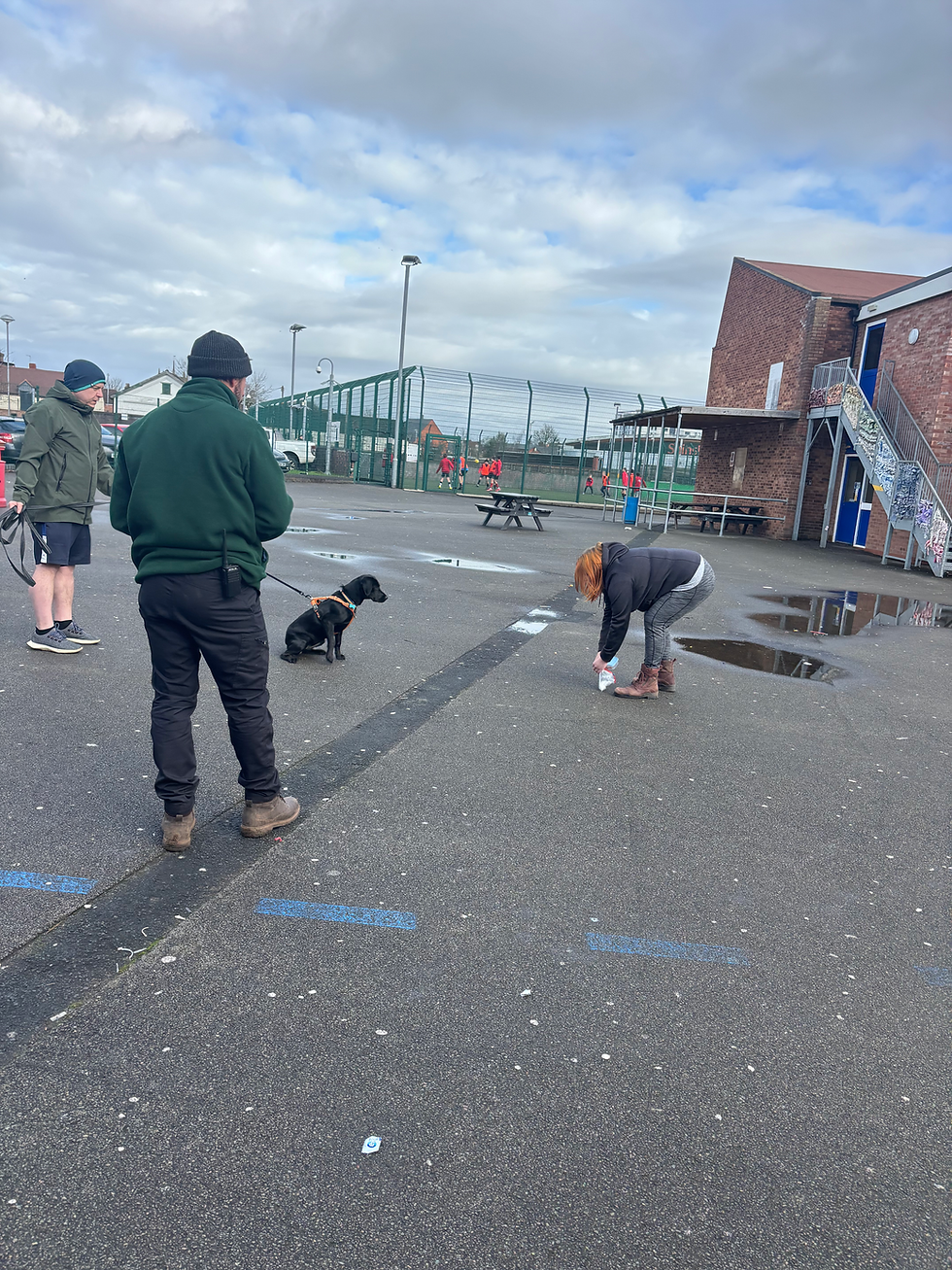
For mantrailing, this gives us something interesting to think about when starting out and when considering the scent article, our odour transfer on it and what is best. Breath samples can help provide an much clearer initial reference and is definitely something worth experimenting with in your training. Walker, M.K., Hall, N.J. and Aviles-Rosa, E.O., 2026. Constituents of Human Scent as Perceived by Wilderness Search and Rescue Area Dogs. Applied Animal Behaviour Science, p.107033.


Comments